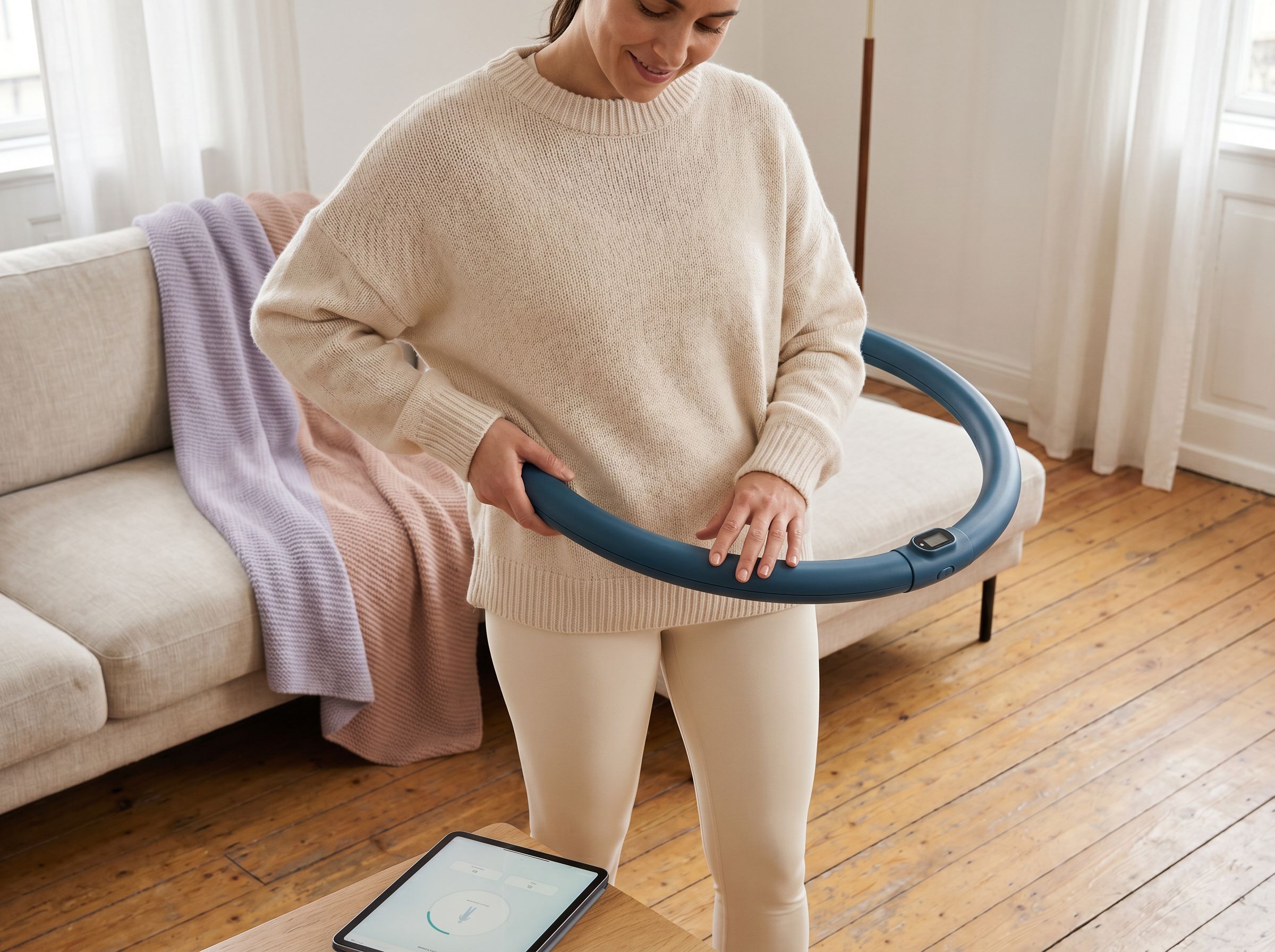
Looking for a fun and effective way to energise your fitness routine while looking after your health? Imagine a workout that not only strengthens your heart but also sculpts your body and improves your flexibility. Fitness hoops are a playful solution offering a host of unexpected benefits. In this article, we'll explore together the incredible advantages of this equipment, which combines enjoyment and performance, to transform your everyday life by adding a zest of energy to your exercise sessions.
Physical benefits of fitness hoops
Improved cardiovascular fitness
When you spin a hoop around your waist, your heart and lungs get to work. A recent study showed that fitness hoop sessions can raise your heart rate just as much as a gentle jog. That makes it an excellent alternative for anyone looking to improve their cardiovascular health without the boredom that running can sometimes bring.
Compared with other cardiovascular exercises, such as dancing or a stationary bike, it's clear that the hoop offers a fun and engaging way to get a complete workout. As you spin, you boost your blood circulation and strengthen your lungs while burning calories.
Muscle strengthening
Using a hoop engages a large number of muscle groups. As you spin it, you work not only your abdomen but also your hips, thighs and arms. Several researchers have noted that this dynamic exercise even has an impact on your posture and balance.
Unlike other fitness equipment, such as dumbbells or weight machines, the hoop strengthens your muscles in a way that remains very fluid and natural. That's one of its major advantages: the ability to tone your body while having fun. And with so many different exercises you can do with a hoop, you'll never get bored!
Improved flexibility
The hoop isn't just a fitness tool; it's also an excellent way to improve your flexibility. With every rotation, you not only strengthen your muscles but also increase your range of motion. This improved suppleness can reduce the risk of injury, particularly when you take part in other physical activities.
Among the specific exercises you can do, overhead hooping and side rotations are particularly effective. By building these movements into your daily routine, you'll quickly notice a difference in your flexibility and, as a result, in how smoothly you move in other sports and activities.
To find out more about the benefits of fitness hoops and discover a few workouts, take a look at this interesting article: Fitness Magazine.
Mental and emotional benefits
Taking up a physical activity such as using a fitness hoop isn't just good for your body, it's good for your mind too. By getting involved in this discipline, you'll discover a wealth of rewarding mental and emotional benefits.
Stress reduction
Stress is an integral part of modern life. Fortunately, exercise is an excellent way to cope with it. When you spin your hoop, your body releases endorphins, often called "happy hormones". This natural release helps reduce anxiety and lift your mood.
Recent studies show that people who regularly include physical activity in their routine, such as hooping, have lower levels of anxiety and depression. According to research published in the Journal of Clinical Psychiatry, even 30 minutes of moderate exercise can make a significant difference to your mental wellbeing.
Greater self-confidence
Picture yourself mastering the hoop's movements, each spin bringing you a little closer to your goal. This mastery isn't limited to physical skills; it also affects how you see yourself. As you notice your progress, you develop greater self-confidence.
Testimonials from hoopers show that not only do they improve their fitness, but they also feel more fulfilled and more confident in their everyday lives. One participant said: "When I hoop, I feel like a dancer, and it gives me a boost to take on my daily challenges."
Better concentration
Have you ever wondered how moving your body can affect your mental clarity? When you move with a hoop, you engage different parts of your brain, which promotes better blood flow and oxygenation. This translates into improved concentration and productivity.
Studies show that regular exercise can improve cognitive performance. According to a study from the University of Illinois, students who take part in physical activity show better attention and improved academic results. This proves that the link between movement and productivity is real, and it can easily be built into your daily habits.
By adding the fitness hoop to your routine, you're not just spinning a simple object. You're investing in your mental wellbeing, strengthening your ability to manage stress, build confidence and sharpen your concentration. So what are you waiting for? Get your hoop spinning and start your journey towards a happier, healthier mind!
Practical tips for adding hoops to your routine
If you've decided to add fitness hoops to your training, it's essential to do so thoughtfully and effectively. That starts with choosing the right hoop, which can have a big influence on your results. Think about the size and weight that suit your goals. For example, if you're a beginner, a lighter, medium-sized hoop is often recommended, as it will be easier to handle. On the other hand, someone looking to step up their training might opt for a heavier hoop, which demands more effort and helps tone the muscles. Don't forget to read other users' reviews so you can make an informed choice before buying.
Once you have the right hoop, putting together a balanced programme is the next crucial step. Feel free to combine hoop exercises with other physical activities. For example, a session could include 15 minutes of hooping followed by some strength exercises or cardio such as running or cycling. What's more, to get the most out of it, it's best to practise regularly. For beginners, three 20-minute sessions a week is a good starting point, and you can gradually increase the duration and frequency as you progress.
Another key to success on your hoop fitness journey is tracking your progress. It's important to set clear, achievable goals. For example, you could aim to master a new hoop technique every month. Having specific goals keeps you motivated and lets you measure your success. Activity-tracking apps such as MyFitnessPal can be very useful for this. These apps don't just measure the time spent hula hooping, but also the calories burned, and they let you see how you're progressing over time.
Level Recommended duration Frequency Beginner 20 minutes 3 times a week Intermediate 30 minutes 4 to 5 times a week Advanced 45 minutes 5 to 6 times a weekBy applying these practical tips, you'll not only enjoy the benefits of fitness hoops but also optimise your progress and stay motivated throughout your fitness journey. So, are you ready to put a new spin on the way you train? Remember to listen to your body and adjust your routine as needed, because every little bit of progress counts!
Step-by-step guide for beginners
Warming up before training
Before launching into a fitness hoop session, it's crucial to warm up. Why? Because warming up prepares your muscles, reduces the risk of injury and improves your performance. In just a few minutes, you can raise your heart rate and get your body ready for the effort.
Here are a few warm-up exercises you can do without any equipment:
- Arm circles: stretch your arms out to the sides and make circles in one direction, then the other.
- Knee bends: do a few gentle knee bends to activate your thighs and glutes.
- Butt kicks: while walking on the spot, try to touch your bottom with your heels.
Basic training programme
Once you've finished warming up, it's time to move on to the training programme. Here's a sequence of exercises to do with your hoop:
Exercise Duration Repetitions Hoop rotation 1 minute 3 Walking circles 1 minute 2 Hoop abs 1 minute 2As for duration and repetitions, start by doing each exercise for one minute, then rest for 30 seconds between sets. Over the days, you can increase the time you spend on each one.
Advanced techniques
Once you feel comfortable with the basic movements, you can explore more advanced techniques. Picture yourself performing movements that are both graceful and complex while keeping your hoop in motion. This can include tricks, transitions or even choreographies.
To progress quickly, here are a few tips:
- Watch online tutorials: plenty of videos can give you visual tips to improve your moves.
- Practise regularly: the more time you spend with your hoop, the more skilled you'll become.
- Don't get discouraged: every beginning is hard. Keep at it and have fun!
To discover even more techniques, feel free to check out additional resources here.
Case studies and real-life examples
As part of their fitness programme, a group in a lively town decided to add fitness hoops to their weekly classes. At first, some members were sceptical about how effective this new method would be. However, after several weeks of regular training, significant changes began to appear. Not only did participants notice improved muscle tone, they also gained agility and stamina. One member even commented: "I didn't know I could have so much fun while working on my fitness!"
This testimonial shows how bringing hoops into group routines can create a positive dynamic. Sharing these experiences boosted collective motivation, allowing everyone to celebrate small victories, whether weight loss, better fitness or simply the pleasure of being active. The group's friendly atmosphere acted as a catalyst for these results, showing that fitness can be both a challenge and a source of joy.
Research on the benefits of circular movements
A recent study carried out by kinesiology researchers examined the effects of circular movements, such as those performed with a hoop, on the human body. The results showed that these movements not only promote coordination and balance but also contribute to a significant improvement in blood circulation. Better circulation means more oxygen and nutrients reach the muscles, which aids recovery after physical exertion.
This research supports the case for including dynamic exercises in training regimes. By boosting both cardiovascular health and muscle function, the fitness hoop proves to be a valuable tool for anyone looking to improve their physical condition. For more in-depth details on the benefits of circular movements, you can read this article on PubMed.
Before and after: member transformations
Change is often one of the biggest motivations for people starting a new physical activity. Take Claire, for example, a participant who used a fitness hoop for four months. At the start, she was worried about her lack of muscle tone and stamina. Today, not only has she slimmed her waist, she has also gained self-confidence. Her before and after photos show an impressive transformation.
Name Before (waist in cm) After (waist in cm) Duration (months) Claire 85 73 4 Marc 90 78 6The transformations seen in this group show a positive impact that goes well beyond appearance. Members also reported a better mood, improved overall wellbeing and lower stress levels. These results reinforce the idea that physical exercise, especially through fun and engaging activities like hooping, can genuinely change lives.
FAQ
Wondering which types of hoop are best suited to beginners? It's recommended to start with lightweight, standard-sized plastic hoops. They're generally less likely to cause injury while still being effective enough to deliver the fitness benefits. If you're sensitive, consider weighted hoops, but make sure they're not too heavy to begin with.
How long should you practise with a hoop each week? To start with, 15 to 30 minutes, three to five times a week, is a good routine. This lets you gradually build your stamina and technique without wearing yourself out.
Are hoops suitable for all ages? Absolutely! Hoops can be adapted for children, adults and older people. They're an excellent way to stay active while having fun. However, young children should be supervised by an adult, and older people, particularly those with health problems, should consult a doctor before starting.
Can you use a hoop if you have back problems? That's an important question. In general, it's possible to use a hoop, but it's crucial to listen to your body. Always consult your doctor or a physiotherapist before starting if you have a history of lower back pain. They may be able to give you specific exercises to do.
Which specific exercises could you combine with the hoop? You can enrich your routine with moves such as hoop squats, side rotations and even ab exercises while holding the hoop. Adding upper-body movements such as arm raises while you spin the hoop can also be beneficial.
How can you avoid injury when using a hoop? The key lies in good technique. Maintain correct posture and avoid forcing your movements. Start with short sessions to let your body get used to it. Remember to warm up before you begin and stretch at the end.
Can hoops help you lose weight effectively? Yes, they can be very effective for burning calories. According to some studies, a hoop session can burn between 210 and 420 calories an hour, depending on the intensity. Combined with a balanced diet, this can really contribute to weight loss.
For more information on the health benefits of hooping, read this article.