When you set out on your fitness journey, you are faced with a huge range of cardio equipment to choose from. Among them, fitness hoops stand out for their originality and sense of fun. Picture it for a moment: you spin, you move, and you burn calories all at the same time. Perhaps you have already wondered whether these hoops can really compete with more traditional cardio machines. In this article, we will explore together the advantages and drawbacks of fitness hoops compared with other cardio equipment, to help you find the one that best suits your lifestyle and your goals. Get ready to discover which of these tools can truly turn your workout into an enjoyable and effective experience!
Fitness hoops compared with other cardio machines
When you decide to choose a piece of cardio equipment, it is essential to assess your personal needs, tastes and fitness goals. Fitness hoops, although less conventional than treadmills and exercise bikes, are growing in popularity for a variety of reasons. But how do they compare with the other options on the market?
First, let's look at fitness hoops. Often associated with fun dance and entertainment sessions, these tools offer an excellent way to work your heart while improving your coordination and flexibility. When you use a hoop, you engage many muscles, including your abs, hips and thighs. This makes it a high-energy activity that can burn between 300 and 600 calories per hour depending on the intensity of the session.
On the other hand, machines such as the treadmill, exercise bike and elliptical trainer have their own advantages. The treadmill, for example, lets you simulate running outdoors, which is ideal for runners or anyone preparing for a race. According to a study by the American Heart Association, running can burn up to 800 calories per hour and is particularly effective for building cardiovascular endurance.
Cardio Equipment Comparison Table
Equipment Calories Burned per Hour Muscles Worked Impact on Joints Fitness Hoops 300 – 600 Abs, Hips, Thighs Low Treadmill 600 – 800 Legs, Heart High Exercise Bike 500 – 600 Legs, Heart Medium Elliptical Trainer 500 – 700 Full Body LowDepending on your preferences, some machines may suit your lifestyle better than others. If you are looking for a fun, engaging activity, the hoop could be the ideal choice. If, however, you are more interested in high-intensity exercise or have specific running goals, machines such as the treadmill may prove more appropriate.
Finally, think about where you will be training. Hoops can be used indoors or outdoors and need very little space, which makes them perfect for working out at home. Some cardio machines, by contrast, can take up a lot of room and require setting up. Consider your budget too: hoops are generally far more affordable than more sophisticated cardio equipment.
Whatever you choose, the key is to find an activity you enjoy and that helps you reach your fitness goals. For more information on the different training options, you can visit this link: The best cardio exercises.
Benefits of fitness hoops
Fitness hoops have become a must-have in the world of sport and wellbeing, but why? As a fun and dynamic exercise tool, they offer plenty of benefits that deserve your attention.
First of all, one of the hoop's greatest strengths is its ability to make cardio sessions enjoyable. Unlike traditional fitness machines such as treadmills or exercise bikes, which can sometimes feel monotonous, the hoop is all about movement and creativity. As you spin it, you activate not only your heart but also your abdominal muscles, hips and arms. That means a full-body workout while you have fun.
When it comes to calories burned, hoops hold their own. A 30-minute session can help you burn between 100 and 300 calories, depending on your weight and the intensity of the exercise. This makes it an effective option for anyone looking to lose weight or stay in shape. What's more, hoops are portable and take up little space, so you can use them almost anywhere. Whether at home, in the park or on the beach, you can easily fit this tool into your daily routine.
Calories burned (in 30 minutes) Type of exercise 100-200 Fitness Hoops 200-300 Running 150-250 Exercise BikeAnother aspect to consider is the mental stimulation that hula hooping provides. Creating routines and exploring new moves can encourage your mind to get just as involved as your body. It brings out a playful dimension that other cardio machines simply cannot offer.
The adaptability of fitness hoops is also remarkable. Whether you are a beginner or a seasoned athlete, hoops come in different sizes and weights to match your level. You can start with a light hoop, which lets you learn the basics, before moving on to heavier hoops for a more intensive workout.
If you would like to find out more about building fitness hoops into your routine, take a look at this article: How to add fitness hoops to your daily cardio routine.
To sum up, fitness hoops are not just an old accessory brought back into fashion, but a genuine piece of fitness equipment with many health benefits. So, are you ready to spin your way to better tone? Explore what the hoop has to offer and give your cardio sessions a new lease of life. To discover the many benefits of this activity in depth, don't hesitate to read our detailed article on The 10 incredible health benefits of fitness hoops.
Improving coordination and balance
Picture yourself working out with a fitness hoop, hips in motion, while trying to keep your balance. It may seem playful, but it is much more than a simple pastime: it is an excellent way to improve not only your coordination but also your balance. Regular hoop practice calls on several muscle groups, particularly the abs and hips, which strengthens your body's stability.
Indeed, when you spin a hoop, you have to constantly adjust your posture and body weight to stop it from falling. This physical demand is what sets the hoop apart from other cardio machines. Take the exercise bike, for example: although it is also effective for burning calories, it does not offer the same balance challenge. The hoop pushes you to engage your body in a dynamic, interactive way.
This work on balance and coordination can also bring benefits beyond the gym. For instance, you may notice improved agility in your everyday activities, whether playing with your children or taking part in a sport. The skills you develop with the hoop often translate into better performance in other areas, such as yoga or dance. Who would have thought a simple hoop could also make you a better dancer?
To give you a clear idea of the differences in coordination and balance between the fitness hoop and other machines, here is a comparison table:
Equipment Coordination improvement Balance improvement Fitness hoop High High Exercise bike Moderate Low Stepper Moderate Moderate Treadmill Low LowAs you can see, the hoop challenges your body in a unique way. It works wonders for your arms and waist, and let's not forget your legs, which also join in the hoop dance, creating a complete workout.
If you would like to learn more about the importance of working on your balance and coordination through different physical activities, read this informative article on the benefits of exercise [here](https://www.runtastic.com/blog/fr/bienfaits-alimentation-exercice/).
Ultimately, the decision to add a fitness hoop to your training routine depends on your personal goals. But if you are looking for an activity that makes exercise fun while improving your coordination and balance, look no further: the hoop could well be the ideal choice for you!
Burning calories
When you are looking to burn calories, it is essential to understand how each type of cardio machine can influence your energy expenditure. Fitness hoops, for example, are much more than a fun tool; they can deliver a dynamic and effective workout. But how do they compare with other cardio machines such as treadmills or exercise bikes?
To give you an overview, here is a comparison table highlighting the estimated calorie burn for a 30-minute session on different machines:
Equipment Calories burned (approx.) Fitness hoop 210-400 Treadmill (light jog) 240-355 Exercise bike (moderate intensity) 210-310 Rowing machine 250-350As you can see, the fitness hoop can help you burn a significant number of calories compared with the other options. This is down to the constant physical effort needed to keep the hoop moving, which engages many muscles throughout your body, especially your core.
But why focus solely on the numbers? The fun, varied nature of hoop sessions can also boost your motivation to stick with a training programme. Indeed, the more you enjoy exercising, the more likely you are to stay committed and make it a habit. If you would like to explore further how fitness hoops can help you improve your endurance while having fun, take a look at this article on fitness hoops and cardio.
On the other hand, even though a treadmill can let you burn a similar number of calories, the experience is often less interactive. Running or walking on the spot can become monotonous over time, leading to a drop in motivation.
It is also important to take into account your personal preferences and fitness level. For example, if you are dealing with joint problems or are new to exercise, a low-impact machine such as an exercise bike might be more comfortable for you. On the other hand, if you are looking for an activity that combines fun and results, the fitness hoop could be your best ally.
All in all, choosing the ideal cardio machine depends on your personal goals and preferences. But if you are looking for an effective way to burn calories while having fun, fitness hoops are well worth considering. For an in-depth look at this topic, don't forget to read our article on the 10 incredible health benefits of fitness hoops.
Accessibility and cost
When you are thinking about adding a new piece of cardio equipment to your training routine, accessibility and cost are often decisive factors. You are no doubt wondering which option offers the best value for money, especially with so many choices on the market.
Fitness hoops, for example, stand out for being very affordable. You can generally buy a quality hoop for under 50 euros, and some models can even be found for less than 30 euros. This makes them highly accessible, even on a tight budget. They are also easy to use and need very little space to train with, which is a considerable advantage if you live in a small flat.
By contrast, when you look at other cardio machines such as treadmills or exercise bikes, the price can climb quickly. A basic treadmill can cost between 300 and 800 euros, depending on its features. If you want a top-of-the-range model, the price can reach 2,000 euros or more. These machines also often need a dedicated space in your home, which can be an obstacle if you are short of room.
Here is a comparison table illustrating the cost differences between fitness hoops and other cardio machines:
Equipment Approx. Cost (euros) Space Needed Fitness hoop 30 – 50 Little Treadmill 300 – 2000 A lot Exercise bike 200 – 1200 ModerateBeyond cost, it is important to assess accessibility in terms of ease of use. Hoops are often seen as a simple, fun tool that can be used in the comfort of your living room or garden. You can even take them with you when you travel, which is not the case with bulkier machines. This means you can easily keep up your training routine wherever you are.
For anyone wanting to add cardio to their life while looking after their wallet, it makes sense to explore cheaper but effective equipment. On top of that, outdoor fitness options such as running are often free, although they do require a certain level of motivation. Remember that commitment to a fitness routine is what matters most, whatever equipment you choose.
Ultimately, the choice between a fitness hoop and other cardio machines depends largely on your budget, the space you have available and what motivates you to stay active. To dig deeper into the subject and discover other ways of bringing fitness into your life, you can visit this link on [the importance of physical activity](https://www.santepubliquefrance.fr), which opens in a new window.
Drawbacks of fitness hoops
Although fitness hoops are often praised for their effectiveness and fun factor, they are not without their drawbacks. Understanding these limitations can help you decide whether this equipment is really what you need on your fitness journey.
First, the fitness hoop requires a certain amount of technique. If you are a beginner, it can be frustrating not to master the spinning motion straight away. Some people get the hang of it easily, while others may become discouraged and give up quickly. This lack of positive progress can lead to a loss of motivation in the long run.
Furthermore, although the hoop can help strengthen certain muscles, it is not a complete workout. It focuses mainly on the abs and hips, leaving out other essential muscle groups. For all-round muscle development and good balance, you will probably need to combine hoop training with other forms of exercise.
To give you a better overview, here is a comparison table of the advantages and drawbacks of fitness hoops compared with other cardio machines such as the exercise bike and the treadmill:
Equipment Advantages Drawbacks Fitness Hoop Fun, improves coordination, targets the abs Learning curve, targeted workout, can cause injury if misused Exercise Bike Low impact, good for cardio, convenient at home Can become monotonous, involves some purchase cost Treadmill Simulates outdoor running, excellent for cardio Risk of injury, space required, high costIt is also important to talk about potential injuries. Improper or excessive use of the hoop can lead to back pain or bruising. People with pre-existing back problems or other medical conditions should consult a professional before getting started.
On a practical level, the hoop also needs a fairly clear space so you can train comfortably. Unlike machines such as the exercise bike or treadmill, which can be used in more confined spaces, the hoop needs room so that you can move around safely.
Finally, think about variety. Adding a hoop to your exercise regime can be entertaining, but over time you may feel the need to vary your routine further. To discover other interesting floor-based training options, take a look at your ultimate guide to choosing the ideal fitness hoop for your goals.
In short, the fitness hoop can be an excellent addition to your routine, but it also has drawbacks that are essential to consider. Sometimes, other equipment may be better suited to your long-term fitness goals. Weigh up these points, and feel free to come back to our main article to take your thinking further.
Physical limitations
When you are thinking about starting a cardio programme, it is essential to take your physical limitations into account. Everyone is unique, and your physical condition plays a crucial role in choosing fitness equipment. For example, if you have joint problems, moderate equipment such as the fitness hoop may be more beneficial than high-impact machines such as treadmills.
It is also important to consider your current fitness level. A beginner might find a hoop not only accessible but also fun, whereas a seasoned athlete might be looking for extra challenges. Hoops allow you to vary the intensity: you can easily adjust the speed at which you spin to match your abilities.
Medical and physiological references indicate that flexibility, muscle strength and endurance are key criteria when choosing equipment. According to a study by the American Academy of Pediatrics, around 18% of overweight adolescents do not get enough physical activity, which underlines the importance of choosing equipment suited to your physical condition to avoid long-term health problems. If you would like to read the study, you can do so here.
Equipment Impact on joints Suitable for beginners Recommended session length Fitness hoop Low Yes 15-30 minutes Treadmill High Not always 20-60 minutes Exercise bike Moderate Yes 30-60 minutesAssessing your mobility before choosing a machine is also essential. Some movements may be restricted if you suffer from chronic injuries or joint pain. With their rotating movements, fitness hoops can help improve your flexibility while offering a low-impact cardio option. This lets you move without causing discomfort or aggravating an existing condition.
Finally, listen to your body. If you feel unusual pain or fatigue, it is important to adapt your routine. You might also consider consulting a healthcare professional or a personal trainer for advice tailored to your situation. Everyone needs to find an activity that suits them, both in terms of enjoyment and physical ability.
In short, fitness hoops offer an enjoyable, low-pressure way to commit to a cardio routine, especially for those who want to respect their physical limitations. By making an informed choice based on your personal condition, you increase your chances of fitness success while protecting your health.
The Quest for Variety
When you start a fitness programme, one of the biggest concerns is often the monotony of workouts. How many times have you noticed a promising session turn into a predictable routine? Using a fitness hoop can bring a breath of fresh air to your exercise routine, but is it really enough to keep boredom at bay? Let's look at the different options available and how each of them can affect your motivation.
The fitness hoop has grown in popularity in recent years, especially with the rise of online fitness videos. Even so, twisting and spinning in time to catchy music can become repetitive. On the one hand, this equipment has the advantage of working your core and improving your coordination. On the other, it is limited by a movement that often stays the same. Imagine doing the same hula hoop movement for several weeks. Doesn't that sound more like a punishment than a pleasure?
Let's look at some alternatives. Cardio machines such as the exercise bike, treadmill or rowing machine offer a wide range of training possibilities. Each of these machines lets you adjust the intensity, pace and even the duration of your exercise. With an exercise bike, for example, you could simulate climbing a steep hill, sprint over short distances or simply pedal at a gentle pace while watching your favourite series.
Taking your fitness level into account is essential. If you are a beginner, a hoop may seem less intimidating than a complex cardio machine. However, if you are looking to progress, stagnation could hold back your goals. Sometimes it is worth embarking on varied sessions that combine several machines. Here is a table summarising the advantages and drawbacks:
Equipment Advantages Drawbacks Fitness Hoop Improves coordination and core engagement Repetitive routine, lower intensity Exercise Bike Variety and adjustable intensity Less engaging when used on its own Treadmill Ideal for cardio, suitable for all levels Impact on joints if misused Rowing Machine Full-body workout Technique required for optimal effectivenessUltimately, the key to a successful fitness routine lies in variety. Don't lock yourself into a single type of training. Feel free to explore the different options to find what you enjoy most. If you would like to learn more about the benefits of a varied approach to cardio, consult reliable online resources, such as those provided by the Healthline website.
Remember, too, to regularly assess your progress and what you feel like doing. Keeping an open mind is the first step towards turning cardio into an enjoyable, energising moment rather than a chore. So, what do you think? Ready to mix up your workouts?
Risk of injury
When you commit to a fitness programme, whether with fitness hoops or other cardio machines, it is crucial to consider the risk of injury. Each type of equipment puts demands on your body in different ways, which can affect the likelihood of developing aches or injuries.
Fitness hoops, for example, are often seen as a fun and engaging option. However, they require a certain degree of skill to avoid injury. Hula hoop movements can put considerable pressure on the lower back, particularly for those who are not used to this type of exercise. Poor technique can lead to lower back pain. On the other hand, studies show that hooping can be beneficial for improving flexibility and strengthening the abdominal muscles when done correctly.
Traditional cardio machines such as treadmills or exercise bikes, by contrast, often offer greater stability. Yet they are not free from the risk of injury either. Overuse injuries, such as sprains or iliotibial band syndrome (runner's knee), are common among treadmill users who do not respect their body's limits or fail to warm up properly before exercising.
Equipment Injury Risks Precautions Fitness Hoops Lower back pain, muscle strain Practise the movements slowly, choose a hoop suited to your height Treadmill Sprains, joint pain Increase intensity gradually, warm up properly Exercise Bike Wrist pain, knee pain Adjust the seat height, make sure you maintain good postureWhen choosing your cardio method, it is essential to consider your fitness level and injury history. If you already have back problems, hoops might not be your best option. Likewise, someone with recurring knee injuries may prefer an exercise bike, which is generally gentler on the joints.
Finally, it is always wise to consult a healthcare professional or personal trainer before starting a new exercise programme. They can advise you on best practice and exercises suited to your current physical condition.
For more information on exercise-related injuries, visit this link.
Benefits of cardio machines
Cardio machines play an essential role in our pursuit of health and fitness. Whether you are a fitness enthusiast or simply looking to stay active, investing in this equipment can greatly improve your exercise routine. One of the main benefits of cardio machines is their ability to offer varied workouts, helping you keep your motivation intact.
Treadmills, exercise bikes and rowing machines, for example, target various muscle groups while boosting your cardiovascular endurance. According to a recent study, a 30-minute workout on a cardio machine can burn between 200 and 300 calories, depending on your weight and the intensity of the exercise. And who wouldn't want to burn calories while improving their health? Find out more about the benefits of cardio.
A wide range of choice
With so many types of cardio machine on the market, everyone can find the one they enjoy most. Here is a table showing some popular machines and their respective advantages:
Equipment Advantages Treadmill Ideal for running, with adjustable speed and incline. Exercise bike Particularly gentle on the joints, ideal for strengthening the leg muscles. Rowing machine Works both the upper and lower body, providing a complete workout. Elliptical trainer Combines a running and stair-climbing motion, which is excellent for low-impact training.In addition, regular use of these cardio machines can also improve your mood. Exercise promotes the release of endorphins, hormones that create a feeling of wellbeing. So not only are you working on your fitness, you also feel happier and more energetic day to day.
Adaptability and accessibility
Another essential aspect is adaptability. You can personalise your workout by choosing the duration, intensity and even the type of exercise you want to do. For example, a beginner might opt for gentler sessions on an exercise bike, while a seasoned athlete could turn to a rowing machine to step up their training.
And let's not forget that, thanks to technological advances, many modern cardio machines offer connected features. Examples include apps that track your performance, motivate you and let you share your progress with friends. This can make your training experience even more enjoyable.
At the end of the day, whether it's fitness hoops or traditional cardio machines, what matters is finding an activity you enjoy that matches your personal goals. For anyone wondering whether fitness hoops can really be effective for weight loss, a comprehensive article looks at this very question: Can you really lose weight with fitness hoops? Here's the truth. It will help you make a more informed choice about your training.
On your fitness journey, remember that every movement counts and that enjoying exercise is often the best motivation to keep going. To find out more about hoops and their surprising benefits, read this other article: The 10 incredible health benefits of fitness hoops.
Variety of exercises
When it comes to choosing between fitness hoops and other cardio machines, the variety of exercises is an essential criterion to consider. What makes hoops so appealing? First of all, the flexibility they offer. You can easily adjust your movements and create varied routines. For example, by adding dance moves or strengthening exercises, you can turn a simple fitness session into a real party.
Cardio machines such as treadmills or exercise bikes, on the other hand, although effective for cardio, tend to limit the variety of movement. Ultimately, the choice depends on what you are looking for. Do you want to have fun and move to the rhythm, or do you prefer a more traditional approach?
To help you see things more clearly, here is a comparison table of the exercise opportunities each option can offer:
Equipment Exercise Variety Muscle Engagement Calories Burned (in 30 min) Fitness Hoops High (dance, strengthening) Lower body + core 210-500 Treadmill Medium (running, walking) Lower body 300-600 Exercise Bike Low (pedalling only) Lower body 200-400As you can see, hoops offer an excellent combination of exercises with real potential to set your training routine alight. This approach not only boosts your motivation but also makes exercise enjoyable. After all, who doesn't like a bit of variety?
On top of that, using a fitness hoop can have beneficial effects on your overall health. To find out more about the benefits, take a look at this article on The 10 incredible health benefits of fitness hoops.
Finally, if you like the idea of a cardio session that combines fun and effectiveness, it may be time to add hoops to your training programme. Whether you are after muscle toning or simply an enjoyable way to stay active, fitness hoops could well be your best ally. Remember, what matters is finding an activity you enjoy, so that you can stick with it in the long term.
To explore the differences between fitness hoops and other cardio machines in more detail, visit our main article here.
Connecting with technology
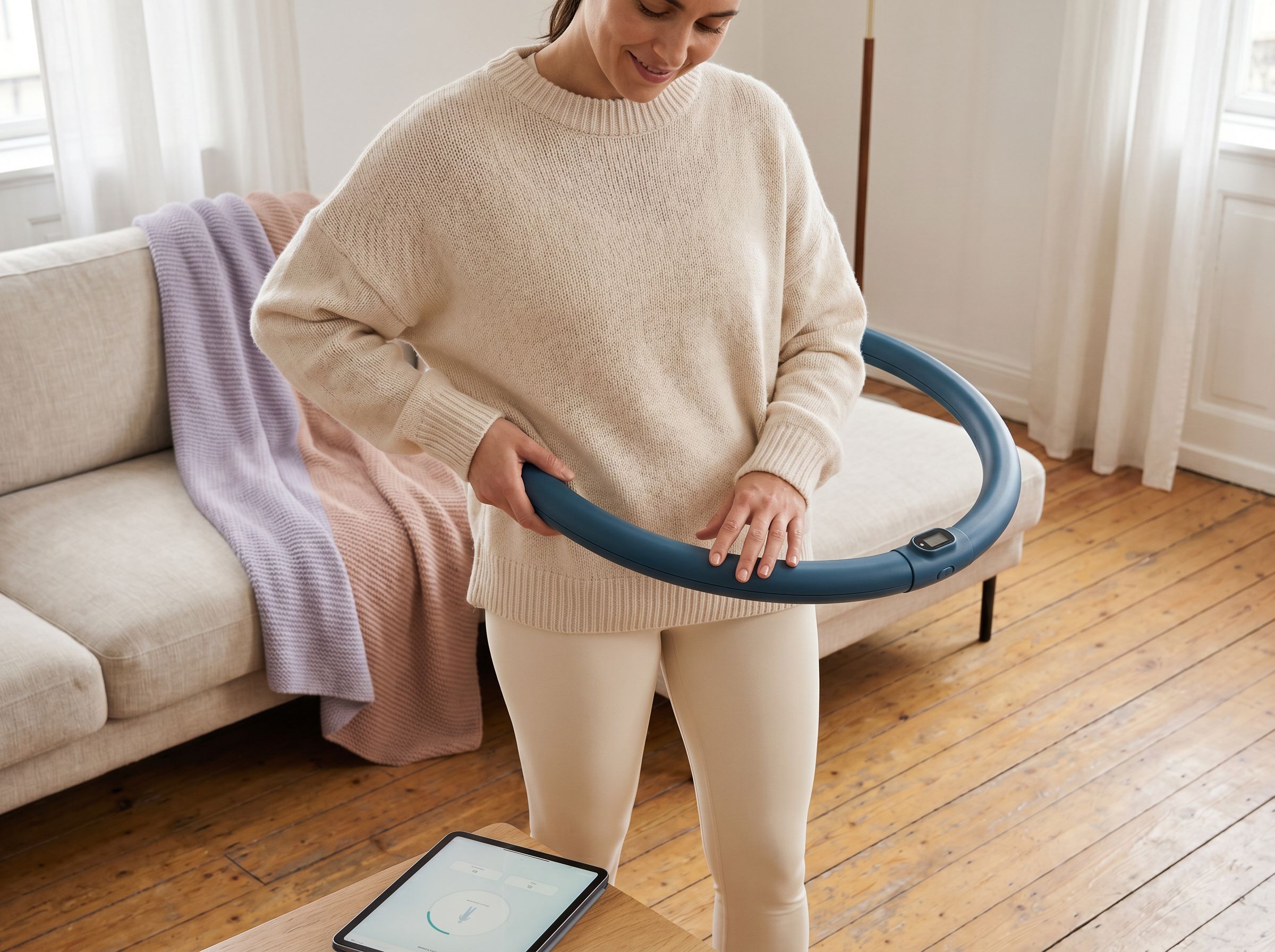
As you explore ways to improve your cardio routine, you may wonder how technology can fit in with your choice of equipment. Today, fitness hoops are not just hoops; they come equipped with smart sensors that track your movements and progress in real time. Imagine being able to measure the calories you burn, your heart rate and even the number of hoop rotations you complete, all at your fingertips!
Let's compare this with other cardio machines, such as treadmills or exercise bikes. Most of these machines also offer similar features. However, the monotony of sprinting on a treadmill or pedalling on a bike can feel rather tedious in the long run. With a hoop, you have the freedom to move, create a playful rhythm and work on your coordination while burning calories.
Technology doesn't stop at sensors. Built-in videos, performance-tracking apps and even online communities can enrich your fitness experience. For example, some fitness hoop brands offer virtual training programmes where you can join live guided sessions with professional coaches. This can make your training more engaging and less isolating.
Have you ever thought about the social side of fitness? With compatible apps, you can challenge your friends or sign up for online group classes. What could be better than sharing your progress with other enthusiasts? It then takes on a whole new dimension: you are not just exercising, you are also spending time with friends, even from a distance!
To give you a clearer idea of the technological features available, here is a comparison table:
Equipment Sensors Apps Online community Fitness Hoops Yes Yes Yes Treadmill Yes Yes No Exercise bikes Yes Yes NoFitness hoops therefore have a clear advantage in terms of social connection and community engagement. Whether for yourself or to set challenges with your loved ones, this equipment lets you combine physical activity and human connection in a single package.
In the end, your choice of equipment really depends on your preferences and what you enjoy. If you are curious to learn more about the benefits of fitness hoops, don't hesitate to read this article, which will shed light on the subject. And don't forget to take a look at the 10 incredible health benefits of fitness hoops to discover everything they can do for you!
Performance tracking
When you start a fitness programme, tracking your performance is essential for measuring your progress and staying motivated. Whether you use a fitness hoop or another cardio machine, it is crucial to know how to assess your performance effectively.
For fitness hoop users, tracking may seem more informal, but there are simple ways to quantify your effort. For example, you can time your sessions, note the number of rotations you complete or even rate the intensity of your workout. If you want to go further, some apps and wearable devices can help you record this data. These tools measure not only the time spent exercising but also the number of calories burned, which is essential for assessing your progress.
By contrast, other cardio machines, such as treadmills or exercise bikes, often offer built-in features for more detailed performance tracking. With heart rate monitors and personalised training programmes, these machines give you an accurate overview of your session. They also let you compare your performance over time through clear graphs and charts.
Equipment Performance Metrics Convenience Fitness Hoops Time, number of rotations, calories Easy to use, inexpensive Treadmills Speed, distance, calories, heart rate Advanced features, detailed tracking Exercise Bikes Time, distance, effort, calories Customisation options, built-in training programmesSo, which appeals to you most? If you enjoy a more relaxed approach where you can simply have fun while you exercise, the fitness hoop could be your best friend! On the other hand, if you are after precise data and detailed reports, you may prefer a traditional cardio machine.
Another point to consider is your personal goal. If you are aiming to reach a certain level of fitness or to lose weight, machines with advanced tracking can give you an extra edge. That said, what matters most is finding a method that motivates you to stay active. You can also combine several activities for a balanced approach. Why not try alternating between different types of cardio equipment on different days? It could make your sessions more dynamic and less monotonous.
Ultimately, whatever you choose, remember that the most important thing is to stay committed to your fitness journey. For more tips on tracking performance and improving your exercise routine, you can read this helpful article here.
Drawbacks of cardio machines
You may be weighing up the ideal equipment for your cardio sessions, torn between a fitness hoop and other machines. Before you decide, let's look together at some of the drawbacks of the most common cardio machines. It could help steer your choice.
First, let's talk about cost. Cardio machines such as treadmills or exercise bikes can be a considerable financial investment. A good treadmill can cost anywhere between 500 and 3,000 euros, depending on its features and brand. For some people, these costs can be a significant obstacle. By comparison, a fitness hoop is usually much cheaper and offers a more playful, accessible approach.
Next, there is the question of space. Cardio equipment such as rowing machines or exercise bikes often needs a dedicated area in your home. If you live in a small flat, finding room for such a machine could prove tricky. A hoop, however, can easily be stored under a bed or in a corner, making it ideal for small spaces.
Maintenance is another point to consider. Cardio machines often need regular servicing to work properly, which may include adjusting the chain on a bike or replacing parts on a treadmill. This can mean extra costs and wasted time. A fitness hoop, on the other hand, needs no particular maintenance, which makes it very practical for those of you who prefer to avoid the hassle.
Finally, let's talk about monotony. Sessions on traditional cardio machines can quickly become repetitive, especially if you don't vary the intensity or programmes. This can undermine your motivation and, eventually, your consistency. The fitness hoop, for its part, offers a variety of moves that can make every cardio session unique and entertaining. It might well keep you motivated over the long term!
In short, while cardio machines have some undeniable advantages, such as performance tracking and the range of workouts they offer, their drawbacks are just as significant. Whether you are limited by your budget, your space or your willingness to maintain your equipment, the fitness hoop could prove an excellent alternative.
For those of you who want to learn more about the different types of fitness equipment and the effect they can have on your health, I invite you to read this detailed article on Healthline. Whether you choose a hoop or a cardio machine, what matters is finding what motivates you and brings you enjoyment in your exercise routine.
High cost
Choosing the fitness equipment that suits you best can be a real headache. Among the multitude of options available, it is essential to consider the cost and effectiveness of each piece of equipment. Fitness hoops, with all their charm and practicality, may seem expensive at first glance. However, let's compare them with other cardio machines to see whether the cost is justified.
When you are thinking of investing in cardio equipment, it helps to know the average prices. For example, a good-quality fitness hoop can cost between 30 and 100 euros, depending on the materials and features. Other machines such as treadmills or exercise bikes, however, can cost several hundred euros, or even run into the thousands for high-end models. Here is a comparison table to help you visualise these costs:
Equipment Average Cost Advantages Drawbacks Fitness Hoop €30–100 Practical, needs little space May require some technique Treadmill €400–3,000 Simulates running, adjustable Bulky, energy-hungry Exercise Bike €250–2,000 Ideal for cardio Can become boring over timeHave you ever considered that a hoop can offer you a wide variety of exercises while being easy to carry around? It is an excellent choice for anyone looking to fit physical activity into their daily life without too much financial strain. What's more, fitness hoops are often well suited to outdoor sessions or small spaces, which gives them an undeniable advantage.
In addition, the longevity of a fitness hoop compared with other cardio machines can offset its initial cost. Bulky machines that need a lot of maintenance can quickly become a burden. Over time, a hoop can become your best friend for fun and varied workouts.
Still undecided? Take a look at this article on the benefits of fitness hoops for everyone. You will discover why this investment can actually prove very worthwhile, both financially and for your health.
In short, the choice between a fitness hoop and other cardio machines depends above all on your goals, your budget and the space you have available. To find out more about the advantages of fitness hoops, don't hesitate to read the 10 amazing health benefits of fitness hoops. It might just help you take the plunge towards a more active life without breaking the bank!
Space requirements
When you are thinking about kitting yourself out to improve your fitness, the question of how much space you have at home is crucial. Whether you opt for fitness hoops or other cardio machines, it is important to set aside a suitable area so you can get the most out of your training.
Fitness hoops are known for being practical and lightweight. Generally, they only need a small space to be usable. Indeed, even in a corner of your living room or a small area of your flat, you can hula hoop without any major constraints. You can easily store your hoop under a bed or in a cupboard once you have finished, which is a real bonus for anyone short of space.
On the other hand, if you are considering bulkier cardio machines, such as a treadmill or an exercise bike, the impact on your space will be far greater. This equipment often requires a dedicated area, not only for setting it up but also for using it, forcing you to rearrange your furniture or find somewhere to store it.
Here is a simplified comparison table to help you visualise the space required:
Equipment Floor space needed (m²) Storage Fitness hoop 0.5 – 1 Easy to store, compact Treadmill 2 – 3 Bulky, often needs a dedicated spot Exercise bike 1.5 – 2 Relatively easy to move, but best with a dedicated spaceIt is therefore essential to work out what kind of space you have before making your choice. Thinking about your living environment and your exercise habits can make all the difference. For some, the fluid, fun movement of hoops may be the ideal option, letting them stay active without having to sacrifice too much space.
Beyond the physical space needed for the equipment, also think about the environment in which you train. Do you need peace and quiet, or a motivating setting? Sometimes a simple corner of your living room can be transformed into an inspiring exercise space. If you would like to learn more about the psychology behind choosing your exercise equipment and the importance of space, this article on fitness hoops and cardio may interest you.
In conclusion, whether you are a hoop enthusiast or prefer more traditional cardio machines, the space you have available will play a crucial role in your decision. Take the time to assess your needs, picture how your space will be organised and choose a solution that lets you stay active while remaining comfortable in your surroundings. To explore the benefits of a well-considered choice further, discover the details in this other article.
Potential for monotony
When choosing a cardio machine, one aspect to consider is the potential for monotony. Workout routines often become boring quickly, especially when they offer no variety. Picture yourself running on a treadmill or pedalling on an exercise bike day after day. At some point, the excitement may fade and the temptation to skip your workout may grow. Now compare that with the fitness hoop. Its ability to make exercise playful and dynamic can help you overcome this hurdle of monotony.
The hoop is not limited to a single way of exercising. You can explore different techniques, whether hula hooping, performing acrobatic tricks or even adding dance elements to your routine. Every session can become a new experience, reducing the risk of boredom. With machines like the treadmill, on the other hand, boredom can quickly set in, as the movements are often repetitive.
Equipment Potential for monotony Exercise variety Treadmill High Low Exercise bike High Low Fitness hoop Low HighAdmittedly, every piece of equipment has its pros and cons. What matters is finding a balance that motivates you and makes your physical activity enjoyable. For those who feel stifled by an overly predictable exercise routine, exploring the fitness hoop could well be the answer. By embarking on this adventure, you will discover that enjoying exercise can boost your long-term motivation.
What's more, working with a hoop can lead you to join group classes, which creates a sociable, encouraging environment. How about sharing a fun moment with friends while you train? Not only will it help you stay motivated, it will also strengthen your social bonds. While isolation can often sap motivation, hoop classes can give you the drive to progress together.
Ultimately, choosing a cardio machine shouldn't just be about finding a training tool. Think instead about what makes you want to move and stay active. Do you want to commit to a routine that can easily become a chore? Or would you rather go for something that lets you have fun while getting fit? Remember that the key to maintaining a lasting exercise routine is finding an activity you genuinely enjoy.
Discover more about the benefits of the fitness hoop.
Practical tips for choosing your cardio equipment
When you embark on your fitness journey, choosing your cardio equipment is crucial. Whether you are a novice or a seasoned gymnast, it is essential to find what suits you best. With so many options available, it can be hard to navigate the different alternatives, such as fitness hoops and other machines. Here are a few practical tips to help you choose.
First of all, think about your personal goals. Do you want to lose weight, improve your endurance or strengthen your heart? Each piece of equipment has its own particular strengths. For example, fitness hoops are perfect for those who want to combine a good cardio workout with muscle strengthening through dynamic movements. Machines such as the treadmill or the elliptical trainer, on the other hand, are very effective for traditional cardio training. Also think about how you like to train. Do you prefer solo sessions or a more playful workout? To learn more, read your ultimate guide to choosing the ideal fitness hoop for your goals.
Next, assess your budget. Fitness hoops are generally cheaper and can be used anywhere. If, however, you opt for a more complex machine, such as a rowing machine or an exercise bike, there are models in every price range. Also think about additional costs, such as accessories or maintenance. Here is a mini-table to give you an idea of average prices:
Type of equipment Average price Fitness hoop €15 – 50 Treadmill €300 – 1,500 Elliptical trainer €200 – 1,200 Rowing machine €250 – 1,000Finally, think about the space you have available. A hoop is easy to store, whereas an exercise bike or treadmill can take up a lot of room. If you live in a small flat, choosing a more compact piece of equipment can be an excellent idea. Also consider how easily you can carry your equipment around, especially if you like to train outdoors.
Also, don't forget to take your current fitness level into account. If you are a beginner, a fitness hoop can offer a fun introduction to exercise, whereas more traditional machines may require a certain level of fitness. Listen to your body and progress at your own pace.
In summary, your choice of cardio equipment will depend on your goals, your budget, the space available and your fitness level. Before you decide, don't hesitate to look for more information. No effort is too great when you are working to improve your health and wellbeing. To explore more of the benefits of fitness hoops, visit our article on the 10 amazing health benefits of fitness hoops.
Assess your fitness goals
Before choosing between fitness hoops and other cardio machines, it is essential to define your fitness goals clearly. What do you want to achieve? Lose weight, tone your body, or simply improve your overall fitness? Each of these goals calls for a different approach. For example, if you are aiming to lose weight, high-intensity activities such as the exercise bike or treadmill can be very effective. If, on the other hand, your aim is to tone your body, the fitness hoop can be an excellent option.
A good question to ask yourself is: what are the benefits of the methods you are considering? Fitness hoops are renowned for their ability to strengthen the abdominal muscles and improve coordination. This can turn a simple exercise session into a fun, enjoyable experience, whereas other machines can become monotonous in the long run.
It is also important to consider how much time you can devote to your workouts. Fitness hoops make it easy to fit short, dynamic sessions into your daily routine. By comparison, some cardio machines require longer periods to be truly effective. So if you are pressed for time, hoops can prove a valuable alternative.
To illustrate all this, here is a comparison table of the different goals and equipment:
Goal Fitness Hoops Other Cardio Machines Weight loss High High Muscle strengthening High Moderate Improved coordination Very high Low Enjoyment High ModerateUltimately, the best choice for you will depend on your lifestyle, your personal preferences and your health goals. Remember that motivation is key: if you find an activity you enjoy, you will be more inclined to stick with it in the long term. Whatever you choose, make sure you strike a balance between enjoyment and effectiveness.
To learn more about the benefits of fitness hoops, you can read our article Fitness hoops vs other cardio machines: which is the best choice for you? and discover the 10 amazing health benefits of fitness hoops.
Take your space into account
When buying fitness equipment, particularly for cardio, the space you have available is a deciding factor. Imagine living in a small flat with a living room that quickly turns into a gym. That is the case for Clara and Thomas, a young couple who recently decided to take up exercise. In their search for an effective way to stay in shape, they realised they had to take the floor space available to them into account.
The fitness hoop, for example, stands out for its minimal footprint. It can be stored under a bed or behind a door with no difficulty. While other machines such as treadmills or exercise bikes can need a decent amount of space, the hoop stands out for its lightness and portability. This may seem trivial, but for those juggling a busy working life and limited space, this feature is crucial.
To help you visualise, here is a small comparison table of different cardio equipment in terms of the space required:
Equipment Footprint (m²) Portability Fitness hoop 0.5 High Treadmill 1.5 Medium Exercise bike 1.2 Low Stepper 0.8 MediumClara and Thomas chose the hoop because it lets them have an effective workout without sacrificing space in their living room. They have also found that it allows them to vary their exercises, making their training routine more fun and less monotonous.
It is also important to consider the other uses of your space. Do you need the room for other activities such as work or leisure? If so, opting for compact yet effective equipment, such as the hoop, could be a wise choice. Ultimately, how well your space and your chosen equipment fit together can make all the difference to your fitness experience.
For further advice on setting up a home fitness space, don't hesitate to read this helpful article here. You will find tips for making the most of your space while staying active and healthy.
So, before making a decision, think about the space you have and assess which solutions fit best into your daily life. This will not only help you stay motivated, but also help you reach your fitness goals simply and effectively.
Try before you buy
When you are thinking of adding a fitness hoop or any other cardio equipment to your routine, one of the most important steps is to try it out before making a final choice. After all, everyone has different exercise needs and preferences. By trying various pieces of equipment, you can get a better idea of what would suit you best.
Take, for example, a visit to a sports shop. There you will find various hoops, treadmills, exercise bikes and rowing machines. Before buying, it is wise to spend a little time trying out this equipment. Ask yourself: do you feel comfortable using this machine? Do you enjoy it? A pleasant experience will increase your chances of staying motivated and committed in the long term.
But remember, trying a product in a shop is one thing; it is also crucial to take your training environment into account. If you plan to use the hoop at home, make sure you have enough space to use it comfortably. Also try to recreate your usual training conditions when testing a piece of equipment. This will give you a better idea of how it will fit into your routine.
There are also online communities and forums where you can gather reviews and feedback from other users. For example, you can browse fitness websites or YouTube channels that demonstrate how to use hoops and other equipment. This will give you valuable insight. You will then be able to assess other aspects, such as durability, ease of use and the results others have achieved.
Be prepared to be amazed by the variety of fitness hoops available. Some are designed for beginners, while others are aimed at more experienced users. Heavier hoops offer more resistance, which can be beneficial for strengthening the abdominal muscles and improving cardio fitness. On the other hand, a lighter hoop may suit you if your main goal is to work on your coordination and agility.
As for other cardio machines, consider the specific features that may meet your needs. For example, an exercise bike can offer a gentler workout for your joints, while a treadmill recreates the experience of running outdoors. It all depends on your personal preferences and your fitness goals.
Finally, don't overlook the value of a home trial period if possible. Many shops and brands offer this option, which lets you fit the hoop or machine into your daily routine before fully committing to your purchase. It gives you a chance to see whether you really like your choice. Ultimately, the most important thing is to find something that motivates you to move and stay active.
You can consult experts or personal trainers for further advice, and find out more about current fitness trends on reliable sites such as PubMed. In the end, take the time to test and evaluate your options so you can make an informed choice that suits you best.
Step-by-step guide to getting started with fitness hoops
You have decided to take up fitness hooping and you are wondering where to start? Don't panic, we are here to guide you through this fun and highly effective adventure! Follow these simple steps to get the most out of your hula hoop experience.
First of all, it is essential to choose the right hoop. Fitness hoops vary in weight, size and material. A heavier hoop is generally easier for beginners to use, as it stays up more easily. Plastic hoops are popular, but foam-padded ones can offer extra comfort. Consider your height and abilities: when you are standing, a hoop should reach somewhere between your waist and your chest.
Once you have chosen your hoop, it is time to get moving. Find a clear space where you can move freely. Channel your inner dancer and have fun! Hold the hoop against your back, then give it a gentle push with your hips to set it spinning around your waist. It may not work the first time, but don't be discouraged: practice makes perfect!
To keep your motivation high, try incorporating dance elements or musical rhythms. By choosing your favourite tracks, you will feel less like you are working out and more like you are at a party. Plus, you will burn calories while having fun! Did you know that 30 minutes of bringing your hoop to life can burn up to 240 calories? It depends on your weight, but it is always a great way to exercise with a smile on your face.
Finally, don't hesitate to join a group or follow videos online. Fitness hoop communities are welcoming and full of tips to improve your technique. Every level is represented, from beginners to experts, and you will learn a great deal from sharing ideas and other people's experiences.
A good starting point for learning more is this comprehensive article on fitness hoops. It will point you towards the differences between these accessories and other cardio machines.
To finish, remember that the essential thing is to have fun and feel good in your body. Whatever cardio equipment you choose, the most important thing is that you enjoy moving. So, are you ready to lift your mood with the fitness hoop? Go on, give it a spin, have a blast, and perhaps you will even discover a new passion!
For more practical tips, you could also read our article on the 10 amazing health benefits of fitness hoops.
Choosing the right hoop
When you are getting into fitness, choosing the right equipment can make all the difference. Fitness hoops stand out from other cardio machines because they are both fun and effective. But how do you know whether this is the option that suits you best? First, think about your personal goals. Do you want to improve your endurance, tone your waist or simply have fun while burning calories?
Many users find hoops excellent for toning the abdominal area. These tools let you work your deep core muscles while improving your coordination. If you have ever tried a hoop, you know it is an engaging experience – almost like dancing! What's more, experts estimate that you can burn up to 400 calories in an hour of hooping, a real plus for anyone looking to lose weight.
Other cardio machines, on the other hand, such as treadmills or exercise bikes, offer a range of alternatives. For example, running is an ideal activity for improving heart health. However, it can be hard on the joints. Bikes, for their part, are perfect for low-impact training. So when choosing your equipment, it is crucial to take your personal preferences and comfort level into account.
It is also important to look at your space. A hoop needs very little room and lets you train wherever you like, unlike a treadmill, which takes up much more space. If you live in a small flat, this can be a deciding factor. But don't stop there! Take the time to look at the different hoop models available. Some are specially designed for intensive use, while others are better suited to beginners.
And don't forget, the importance of motivation cannot be underestimated. Do you have a friend who wants to join you on your fitness journey? Hooping together can turn a workout into a moment of fun. Many people share their challenges and successes on social media, which can also boost your motivation.
Criteria Fitness Hoops Other Cardio Machines Impact on the Joints Low Variable Space Needed Minimal Large Calories Burned in 1 Hour 400 300 to 600 (depending on the machine) Fun Factor High VariableTo conclude, the choice between a fitness hoop and other cardio machines largely depends on your goals, your comfort and your training environment. If you are still undecided, read this article to explore the features of the different types of equipment in more depth: Fitness hoops vs other cardio machines: which is the best choice for you?. Don't hesitate to find out more, because your wellbeing deserves your full attention!
For a complete understanding of the benefits fitness hoops can bring, take a look at our article on The 10 amazing health benefits of fitness hoops. You are sure to find valuable information to help you make your decision!
Setting up a training programme
Creating an effective training programme can sometimes seem daunting, but you don't have to navigate the process alone. Whether you are using fitness hoops or other cardio machines, choosing a routine tailored to your needs is essential to staying motivated and reaching your fitness goals.
First of all, start by defining your goals. Do you want to lose weight, improve your endurance or simply tone up? Each of these goals will influence the type of training you choose. For example, if you opt for the fitness hoop, you can include dance moves that burn calories while you have fun.
Next, think about the length and frequency of your workouts. A good general rule is to aim for at least 150 minutes of moderate activity per week, whether with hoops or other cardio machines such as the exercise bike or treadmill. To start with, you could plan three 30-minute sessions a week. This will let you adapt gradually to your new routine.
Once you have set your goals and your schedule, it is time to choose the exercises you will include in your programme. Hoops offer a variety of fun exercises that can make your cardio sessions less monotonous. You can also consider other machines such as elliptical trainers or rowing machines, which work different parts of the body.
Equipment Advantages Drawbacks Fitness hoop Fun, improves coordination Can be difficult at first Treadmill Makes it easy to control intensity Can become monotonous Exercise bike Space-saving, low-impact training Less work for the upper bodyBy including these different types of equipment in your routine, you can give your body varied challenges and avoid the risk of hitting a plateau. Want to know how to get the most out of your fitness hoop? Read this article to learn how to fit fitness hoops into your daily cardio routine.
Finally, don't forget to listen to your body. Recovery is just as important as the physical activity itself. Give yourself rest days and balance your programme with strength exercises for the best results. The key is to find a happy medium that keeps you motivated and lets you enjoy your training.
For more information on the health benefits of hoops, don't hesitate to read our article on the 10 amazing health benefits of fitness hoops.
Adding complementary exercises
When you start a fitness routine, it is essential not to limit yourself to a single training method. Fitness hoops can be an excellent addition to your programme, but why not explore other cardio equipment too, to maximise your results? Including a variety of exercises can not only make your sessions more fun but also improve your overall fitness.
Imagine you are at the gym. You don't want to spend your whole session hooping. Instead, consider a combination of exercises. For example, you could alternate between the hoop, the elliptical trainer and the treadmill. This approach lets you work different muscle groups, improve your endurance and burn more calories. Remember that switching exercises challenges the body in different ways, which can also reduce the risk of injury.
Here is a table summarising several exercises and types of cardio you can combine with hoop training, along with their respective benefits:
Exercise Type Main benefit Fitness hoops Low-impact cardio Improves coordination Exercise bike Indoor cardio Strengthens the legs Treadmill Indoor cardio Full-body workout Skipping High-intensity cardio Burns a lot of calories in a short timeBy combining these exercises, you benefit from a holistic approach to your training. For those looking to build strength, consider adding strength-training exercises. By adding a few squats or press-ups after your cardio sessions, you will strengthen your muscles while keeping your heart working.
But does adding other exercises really make a significant difference? Absolutely. According to recent studies, participants who varied their cardio sessions reported greater motivation and higher body satisfaction. This can be put down to the fact that the brain loves novelty. Switching between different machines keeps boredom at bay and creates a dynamic environment that is ideal for working on yourself.
You are no doubt wondering how to fit these exercises into your routine effectively. A good approach is to draw up a weekly training plan. For example, you could devote some days to hoop exercises and others to treadmill sessions. Feel free to adjust this plan according to your progress and how you feel, and don't forget to take rest days so your body can recover.
Ultimately, choosing to vary your training is a step towards better health and long-lasting fitness. So why not give it a try? To learn more about the best training methods, take a look at this useful article on [the benefits of varied exercise](https://www.exemple.com), which opens in a new window.
Case studies and real-life examples
To better understand the advantages of fitness hoops over other cardio machines, let's explore a few case studies and inspiring stories together. Take Lisa, a mother who wanted to lose weight after her pregnancy. When she discovered fitness hoops, she was won over by how playful they are, which made exercise feel far less tedious. By committing to a 30-minute hula hoop session every day, Lisa noticed significant changes not only in her figure but also in the way she approaches fitness. She even managed to get her children involved, with the added bonus of improving their family time.
Next, let's look at David, a young man who was often at the gym but had grown tired of traditional cardio machines. When a friend suggested he try a fitness hoop, he was sceptical. However, after a few sessions, he found he could burn as many calories as on an exercise bike while having fun. Using an app to track his progress, he was able to compare his time on the hoop with other machines and even shared his results on social media, inspiring others to give it a go.
To illustrate these differences more clearly, here is a comparison table summarising the advantages of the fitness hoop over other popular cardio machines:
Feature Fitness Hoop Exercise Bike Rowing Machine Calories burned (in 30 min) 200-400 calories 150-300 calories 250-400 calories Group participation YES NO NO Versatility of movement HIGH MEDIUM LOW Initial cost Low High HighAs you can see, the fitness hoop doesn't just help you burn calories; it also offers an interactive, engaging workout experience that you can share with your loved ones. Hoops are an excellent way to combine fun and physical activity, which can lead to a more sustainable routine in the long run. You might also be interested in the , which show how this activity can suit children, adults and even seniors.
In short, Lisa's and David's stories show that every type of machine has its merits, but the fitness hoop clearly stands out for its sociability and effectiveness. This should encourage you to consider adding it to your exercise routine. Whether you want to have fun while staying active or to burn calories, hoops may be the ideal solution for you. For more detailed information, take a look at the article on the advantages of fitness hoops‘; ?>.
A hoop user's testimonial
Meet Paul, an energetic young man with a passion for fitness. Like many of you, he spent a long time torn between different cardio machines. After several months of experimenting with the exercise bike, the treadmill and, finally, the fitness hoop, he found his ideal training partner.
"When I first tried the hoop, I wasn't sure about it. I thought: 'Is this really going to work?' But after a few sessions, I realised it wasn't just a childhood toy. It's a genuine tool for toning my waist, improving my coordination and, above all, burning calories."
What Paul particularly liked was how much fun it was to fit this exercise into his daily routine. "I remember one Saturday morning, I put on my favourite music and started hooping. I realised I'd spent an hour training without even noticing! It was so entertaining."
Paul also says he appreciates how portable the hoop is. Unlike other cardio machines, which often take up a lot of room in his flat, the hoop slides easily under his bed. "When my friends come round, I always show them the hoop, and before long we're all having a little competition. It's become a great way to socialise while staying active."
Finally, he stresses that the results speak for themselves. "By using it regularly, I've seen a difference in my figure. Not only has my waist slimmed down, but I feel much more energetic day to day."
Paul concludes: "If you're looking for an activity that combines fitness and fun, don't hesitate to try the fitness hoop. It's been a game changer for me, and I'm convinced it can be for you too!"
For those who want to discover tips and advice on getting the most out of a hoop, you can visit this fitness website.
The story of a gym with a range of cardio machines
In a corner of the city, a small gym opened its doors more than a decade ago, driven by its founders' passion for fitness. At first, the equipment could be counted on the fingers of one hand: a treadmill, a stationary bike and, gathering dust, an abandoned hoop. But over time the gym evolved, as did its members' habits and needs.
Picture this small space, now filled with all kinds of machines, from cross-trainers to rowing machines, each offering a unique cardio workout experience. Every machine has its own story, its fans and its critics. Treadmills, for example, have become the go-to choice for those who love the feeling of running without the uncertainties of time and weather. Stationary bikes, on the other hand, attract cycling enthusiasts, letting them pedal away without ever leaving the gym.
Meanwhile, the hoop has gradually reclaimed its place. It was once seen as a children's plaything, but it has been rediscovered as a real ally for cardio and waist toning. This comeback surprised many of the gym's regulars, who assumed that new high-tech machines would always outshine the classics. Yet there is an undeniable magic in the fluid movement of a hoop that tempts everyone to try this playful exercise.
Watching the members, you can easily spot who heads for which machine. Cycling devotees love the challenge of a spinning class, while others prefer the calm of a walk on the treadmill. But amid all this variety, what could possibly unite these choices?
Perhaps it is the personalised training experience, or the search for an alternative to monotonous workouts. Hoops may look simpler, but they create a real sense of community. Members gather around new techniques, sharing moments of laughter and motivation. Hula hoop classes quickly fill up, and the gym's windows ring with bursts of joy.
With the success of the hoop and the constant evolution of cardio machines, the founders began to think about activities that combine the best of both worlds. At the end of the day, every machine has its own pros and cons, and choosing one over another often comes down to personal preferences and individual fitness goals.
Taking into account the social and fun side of these choices will be essential for anyone looking to commit to a cardio programme. For more information on the various machines and their impact on health, take a look at this article in [Fitness Magazine](https://www.fitnessmagazine.com), which explores in depth the benefits of the cardio options available in gyms.
Ultimately, whether you are a hoop fan or a die-hard devotee of modern machines, what matters is staying active and enjoying your workouts. After all, your wellbeing deserves the choice that suits you best!
Comparing results between hoop users and treadmill users
When you are thinking about choosing a cardio machine to improve your fitness, it is essential to understand what results you can expect. Let's take a moment to compare fitness hoop users with treadmill users. Whether you are after muscle toning or weight loss, each option has its pros and cons.
Fitness hoops, often seen as a playful tool, are also highly effective. According to a study by the American Council on Exercise, hoop users can burn up to 300 calories an hour while toning their waist, hips and abdomen. It is an activity that works the heart while improving flexibility and balance. What's more, every session will feel more like play than exercise!
Treadmills, on the other hand, are often regarded as a cardio classic. They let users simulate outdoor running, which is particularly welcome on rainy days. According to the same study, someone running at a moderate pace on a treadmill can burn between 600 and 800 calories an hour, making it a favourite for those looking to lose weight quickly.
Criterion Fitness hoops Treadmill Calories burned per hour 300 600 – 800 Muscles engaged Mainly the core Legs, glutes, heart Fun factor High Medium to low Space required Compact BulkierHoops also offer a community side that you could benefit from. Joining a hoop class can be a great way to meet new people who share your fitness goals. Treadmills, by contrast, can be used both at the gym and at home, giving you a great deal of flexibility in your schedule.
The key to working out what suits you best lies in your personal goals and training preferences. If you like the idea of having fun while you work out, the hoop could be your best ally. But if you want a more intense, all-round workout, the treadmill might be the ideal choice.
Ultimately, whatever you choose, what matters is staying active and enjoying your activity. You can even combine the two to vary your training sessions. To deepen your knowledge of these machines and pick up tips and tricks, don't hesitate to consult reliable online resources such as Verywell Fit.
FAQ
In this section, we answer some of the most frequently asked questions about choosing between fitness hoops and other cardio machines. Whether you are new to exercise or a seasoned athlete, these answers should help you make an informed decision.
1. Are fitness hoops really effective for burning calories?
Yes, fitness hoops can be very effective for burning calories. On average, a person can burn around 400 to 600 calories an hour using a fitness hoop. This depends, of course, on the intensity of the exercise and the user's weight. Compared with other machines, it is an excellent form of cardio that also engages several muscle groups.
2. How do fitness hoops compare with treadmills?
Treadmills have the advantage of letting you control speed and incline precisely, which is ideal for targeted workouts. Hoops, on the other hand, are often considered more fun and can easily be built into group sessions. For many people, the social and enjoyable side of hoops makes all the difference.
3. Which cardio machines are best for beginners?
For beginners, the fitness hoop can be a more accessible option. It requires less technical skill and can be used at home or outdoors. Other machines such as stationary bikes or rowing machines can also be suitable, but they may require more technical adjustments.
4. What common injuries should you avoid with fitness hoops?
As with any exercise, there is a risk of injury. Back and hip pain are the most common. It is essential to warm up properly and use the correct technique. If you want to learn how to use a hoop safely, read your ultimate guide to choosing the ideal fitness hoop for your goals.
5. Are hoops suitable for all ages?
Yes indeed, fitness hoops suit every age group, from children to older people. They offer a gentle yet effective approach to exercise, allowing everyone to enjoy the benefits of regular physical activity while having fun!
Conclusion
Whether you opt for a fitness hoop or another cardio machine, it is crucial to choose the one that motivates you most to stay active. Visit our site to discover the 10 incredible health benefits of fitness hoops, so you can weigh up the pros and cons of every option available to you.
Which muscles are worked when using a fitness hoop?
When you spin a fitness hoop around your waist, you have surely felt the warmth spreading through your body. But beyond the fun, playful side of this activity, which muscles are actually being worked? It is not just a passing fad; using a hoop engages several muscle groups dynamically.
First of all, the abdominal muscles play a central role. As you lift and spin the hoop, your muscles work remarkably hard. The rectus abdominis and the obliques are particularly called upon to keep you balanced and carry out the rotating movements. This not only helps strengthen your core but also sculpts your waist.
Next, let's not forget the leg muscles. The quadriceps, hamstrings and glutes are also activated. By holding a stable posture while swinging the hoop, you use your legs to keep your balance. This makes for effective strengthening, especially if you add leg movements such as squats or lunges during your session.
Another muscle group that is often overlooked but deserves a mention is the back. The paraspinal muscles, which support your spine, also work when you use the hoop. They help maintain good posture and prevent injury, making your workout safer.
For a visual overview of the muscles worked, here is a summary table:
Muscle Role when using the hoop Abdominals Stabilisation and rotation Legs (quadriceps, hamstrings, glutes) Balance and movement Back muscles Postural supportBy adding a hoop to your training routine, you can achieve impressive results while having fun. Whether you are a fitness novice or an expert, this versatile tool can adapt to your needs. For those wondering about the specific benefits of this equipment, an interesting article may answer your questions: Can you really lose weight with fitness hoops? Here's the truth.
In summary, using a fitness hoop works a wide range of muscles, turning every session into a full-body workout. So, are you ready to discover the advantages of other cardio machines to vary your routine? Don't forget to read our article exploring the many health benefits of fitness hoops.
How long should I train with a hoop each day?
When it comes to incorporating the hoop into your cardio routine, the question of training time is crucial. You may be wondering how much time you should devote to this exercise each day. The answer depends on several factors, including your personal goals and your fitness level.
To start with, if you are a beginner, it is advisable to begin with sessions of 10 to 15 minutes a day. This will let you get used to the movement without causing excessive fatigue or injury. As you gain confidence and stamina, you can gradually increase the duration to 20 to 30 minutes a day.
For those looking to lose weight or improve their fitness, aiming for 30 to 60 minutes of hooping a day is an excellent option. In fact, fitness experts often recommend doing between 150 and 300 minutes of cardiovascular activity a week for optimal health. By including the hoop in your routine several times a week, you can easily reach these targets.
Experience level Recommended duration Beginner 10 to 15 minutes Intermediate 20 to 30 minutes Advanced 30 to 60 minutesAnother aspect to consider is the type of workout you choose to do with the hoop. Sessions built around varied movements, such as hula hooping and quick transitions between different exercises, can make your training more effective and more fun. This can also help keep you motivated.
You can also include circuit training, where the hoop is used alongside other exercises such as squats or burpees. This can stop you getting bored and help you make the most of your training time. Consider alternating days when you focus solely on the hoop with days when you combine it with other exercises.
Ultimately, what matters is finding a pace and routine that suit your lifestyle. Remember that, however much time you decide to devote to this activity, consistency is key. The more regularly you hoop, the closer you will get to your fitness goals.
If you are curious to know whether the hoop can really help you lose weight, I invite you to read this article: Can you really lose weight with fitness hoops? Here's the truth.
Finally, if you would like to explore the benefits of fitness hoops further, feel free to visit our comprehensive resource: The 10 incredible health benefits of fitness hoops.
Can cardio machines really help you lose weight?
When you are trying to lose weight, it is essential to choose exercise methods that suit you. Cardio machines are often in the spotlight, promising significant results. But are they just a fad or a genuine solution? In reality, these devices, whether treadmills, exercise bikes or fitness hoops, can be excellent tools for reaching your goals.
To begin with, you need to take into account the calories you burn during your workout. A cardio machine lets you monitor your energy expenditure, which is essential when trying to lose weight. According to a study by the National Institutes of Health, moderate- to high-intensity exercise such as running or cycling can burn between 400 and 600 calories an hour, depending on your weight and metabolism. By comparison, using a fitness hoop can burn between 200 and 300 calories an hour, while also improving your muscle tone.
You are probably wondering why you would choose a hoop over another cardio machine. Here are a few points to consider:
Machine Calories burned (in 1 hour) Advantages Treadmill 400-600 Builds stamina and leg strength Exercise bike 300-500 Improves stamina and is gentle on the joints Fitness hoop 200-300 Fun, develops coordination and strengthens the absAs you can see, each machine has its own strengths. The treadmill is ideal for those who love running, while the exercise bike is perfect for protecting your joints. The fitness hoop, meanwhile, stands out for its playful side. It lets you not only burn energy but also have fun and let off steam. Who said losing weight had to be boring?
By choosing to add a hoop to your exercise routine, you are opting for an entertaining alternative. Not only will you improve your stamina, but you will also tone your waist while developing your coordination. To find out more about the positive effects of exercising while having fun, take a look at our article on fitness hoops and cardio.
Ultimately, choosing a cardio machine should depend on your preferences and your specific goals. Whether you are a keen runner, a cyclist or a hoop enthusiast, every physical activity has the potential to help you progress. So why hesitate? Take the plunge and find the method that will help you achieve your ambitions in a joyful and effective way. For more information on how these machines compare, you can explore our in-depth article on the 10 incredible health benefits of fitness hoops.
How can you avoid injury when using a fitness hoop?
When you start incorporating the fitness hoop into your exercise routine, it is essential to take precautions to avoid injury. On this exciting fitness journey, you will want your experience to be both enjoyable and safe. Here are some practical tips to help you stay in shape while using this playful piece of equipment.
First and foremost, it is crucial to choose the right hoop. A hoop that is too heavy or too light can lead to muscle strain or imbalances. Opt for a hoop suited to your fitness level. If you are just starting out, a lighter hoop will be easier to handle, while a heavier hoop can provide better resistance once you are more experienced.
Next, technique is essential. Take the time to learn how to spin your hoop properly. If you stand too rigidly or don't move your hips enough, you risk back or knee pain. A slight bend in the knees and a good swaying motion of the hips are key to avoiding any strain on your body.
It is also wise to start with shorter sessions and gradually increase the duration as your body gets used to the exercise. This will allow your muscles to adapt and build your stamina without injury. Don't forget to warm up before you start and stretch after each session. This helps prepare your muscles for the effort and reduces the risk of aches and stiffness.
Another aspect to consider is your training space. Make sure you have enough room to move freely without the risk of hitting anything. A clear area will allow you to concentrate on the movement rather than on what might be around you.
Finally, if you notice persistent pain or signs of discomfort, don't ignore these warnings. Listen to your body and don't hesitate to take a break. Sometimes a little rest is exactly what you need to come back even stronger. If you are interested in finding more tips on fitting this type of exercise into your daily cardio routine, read this article: How to incorporate fitness hoops into your daily cardio routine.
For those who want to explore the many benefits of the fitness hoop, feel free to follow this link on The 10 incredible health benefits of fitness hoops. You will see that the hoop is not only a fantastic way to burn calories but also an excellent way to strengthen your body while having fun!
What is the best cardio machine for beginners?
When you are just starting your fitness journey, choosing a cardio machine can seem daunting. Like many of us, you have probably considered several options, from treadmills to exercise bikes. But have you thought about fitness hoops? These versatile tools are not just trendy; they also offer undeniable advantages for beginners.
Fitness hoops, for example, are often underestimated. By letting you have fun while burning calories, they make exercise feel less of a chore. In fact, by using a hoop regularly, you can burn up to 600 calories an hour! That makes it a surprisingly effective option for those who want to lose weight without spending hours in a gym.
But why choose a hoop over another cardio machine? The answer lies in its simplicity and accessibility. Compared with an exercise bike or a treadmill, the fitness hoop requires less financial outlay and less space. You can use it at home, almost anywhere, which removes any excuse not to train.
You may be wondering how to get started with a fitness hoop. Here are a few practical tips: start with short sessions of 10 to 15 minutes, then gradually increase the duration as you gain confidence and stamina. Choose a hoop whose diameter and weight suit your body to make things easier, and don't forget to wear comfortable clothing that lets you move freely.
Cardio Machine Advantages Disadvantages Fitness Hoop Fun and effective, good for coordination May take some time to get used to Treadmill Ideal for intense cardio, suits all levels Can be boring, bulky Exercise bike Good for the lower body, low impact Less engaging in terms of full-body effortAnother feature of hoops is their ability to strengthen the whole body, particularly the core. This makes hoops an excellent choice if you want not only to improve your stamina but also to tone your figure. What's more, they often come with varied programmes that make training more dynamic and less repetitive.
Finally, bear in mind that fitness hoops have another surprising advantage: their cost. They are considerably more affordable than much cardio equipment, making them an excellent option for beginners who want to get back in shape without emptying their wallets. To learn more about the advantages of fitness hoops, read this article on fitness hoops: the secret tool for burning calories effectively.
At the end of the day, the best cardio machine for you depends on your personal preferences and fitness goals. If you are looking for a fun, effective and inexpensive option, fitness hoops could well be the ideal solution. Feel free to explore other options, but bear in mind that the most important thing is to choose what suits you best and stay active.
Are fitness hoops suitable for people of all ages?
Fitness hoops have become very popular in recent years, but are they really accessible to everyone, whatever their age? The answer is an enthusiastic yes! Whether you are a young adult keen to burn calories or a senior looking to improve your flexibility, there is a way for you to connect with this fun and dynamic tool.
To begin with, it is worth noting that fitness hoops vary in size, weight and material. This means you can find a hoop that matches your fitness level and specific needs. For example, lighter hoops are generally recommended for beginners or children, while heavier models can offer an excellent challenge for more experienced users.
In terms of health, using a hoop improves coordination, increases stamina and can even contribute to weight loss. According to a study by Colorado State University, 30 minutes of hooping can burn up to 210 calories for a person weighing 68 kg. That may be less than some cardio machines, but the playful nature of the hoop motivates you to train for longer, making exercise feel less tedious.
Another aspect to consider is the impact on the joints. Hoops, when used correctly, are generally gentle on the joints and can be adapted to suit people who may be limited by joint problems. It is always advisable to start slowly and pay attention to your body, especially if you are older or have health concerns.
For those thinking of taking up fitness with a hoop, here are a few practical tips:
- Choose the right hoop: As a beginner, opt for a wider, heavier hoop, as it will be easier to control.
- Start with short sessions: Sessions of 10 to 15 minutes can be ideal to begin with. You can then gradually lengthen them.
- Build it into your routine: Try to set aside some time each day to train with the hoop. It could be an enjoyable moment spent listening to music.
- Vary your exercises: As well as hooping, you can try additional moves such as squats or twists for a full workout.
All in all, the fitness hoop can be a wonderful option for almost everyone, provided you listen to your body and adapt the intensity of the exercise to your level. Perhaps you would like to find out more about choosing the ideal hoop for your needs? Here is your ultimate guide to choosing the ideal fitness hoop for your goals.
To learn more about the many advantages of hoops, read this article highlighting the 10 incredible health benefits of fitness hoops. So what are you waiting for? Grab your hoop and start spinning!
Are there specific hoops for particular fitness goals?
Fitness hoops have grown in popularity in recent years, but did you know that there are different types suited to specific goals? Whether you want to lose weight, tone your body or even improve your balance, there is a good chance a hoop is right for you.
First of all, there are weighted hoops. These hoops are often heavier than standard models, which lets you increase the intensity of your workout. Heavy hoops, generally weighing between 1 and 2 kg, not only help burn calories but also strengthen your abdominal and hip muscles. With regular sessions, you will notice an improvement in your muscle tone. What's more, because they spin a little less easily, you are less likely to be distracted by the television or your phone!
If your aim is weight loss, also consider resistance hoops. These models are designed with built-in elastic bands that provide extra resistance. This addition makes every movement even more demanding, pushing you to burn more calories. By also incorporating dance moves, you can make your workout far more fun and effective.
For those looking to improve their coordination or balance, lighter and wider hoops are often recommended. A lighter hoop lets you focus on the movements and have fun without tiring quickly. This can be particularly beneficial for beginners who want to get to grips with the technique before moving on to heavier or more challenging hoops.
Speaking of specific goals, it is worth noting the health benefits that using a hoop can bring. For example, not only does it help tone your body, but it also improves cardiovascular health and boosts blood circulation. To learn more about the health benefits, you can read this article on the 10 incredible health benefits of fitness hoops.
Finally, when it comes to choosing between hoops and other cardio machines, each option has its advantages. Stationary bikes, treadmills and cross-trainers all offer good workouts. However, one of the main advantages of hoops is their accessibility and relatively low cost. You can easily fit them into your daily routine at home without needing much space.
So, if you are ready to choose the hoop that suits you best, take a moment to think about your fitness goals and what motivates you. Is it weight loss, toning, or perhaps even better coordination? Based on that, you will be able to find the ideal hoop for you. Once you have made your choice, embark on this adventure and watch the transformations you can achieve! For more comparative advice on choosing a cardio machine, don't forget to read our article on which is the best choice for you.